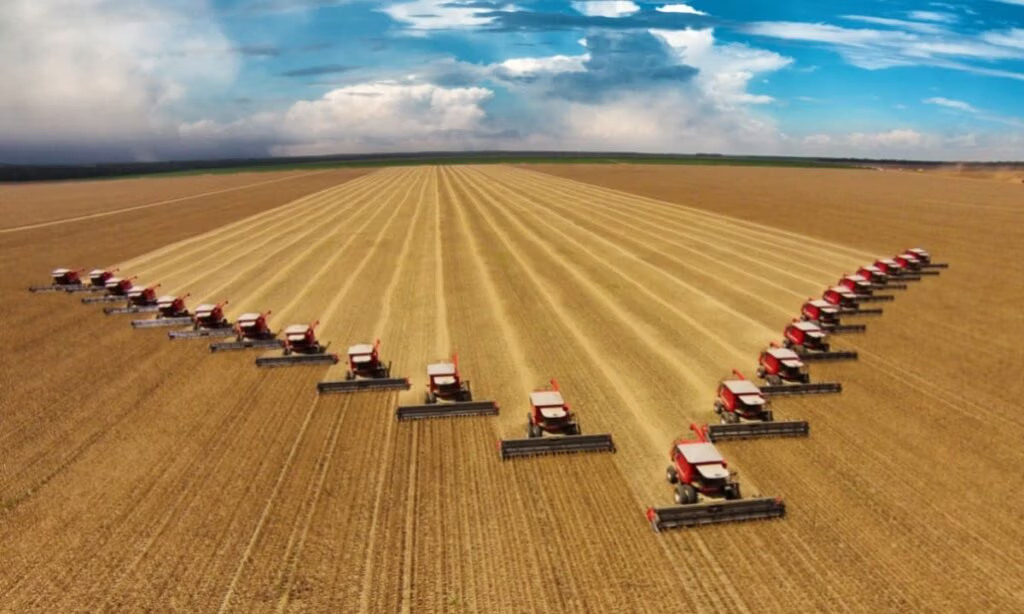
The industrial model of food production is a recent experiment—barely a century old. It promised abundance and efficiency, yet it has steadily stripped nutrition from food, vitality from landscapes, and agency from the people who farm them. Still, it persists. Not because it works well, but because it mirrors a deeper cultural habit: the urge to simplify, and control life, through the application of logical, linear thought.
Regenerative agriculture and syntropic agroforestry are a different proposition entirely. They do not battle nature’s complexity; they collaborate with it. They assume that life will organise towards health if given the right conditions.
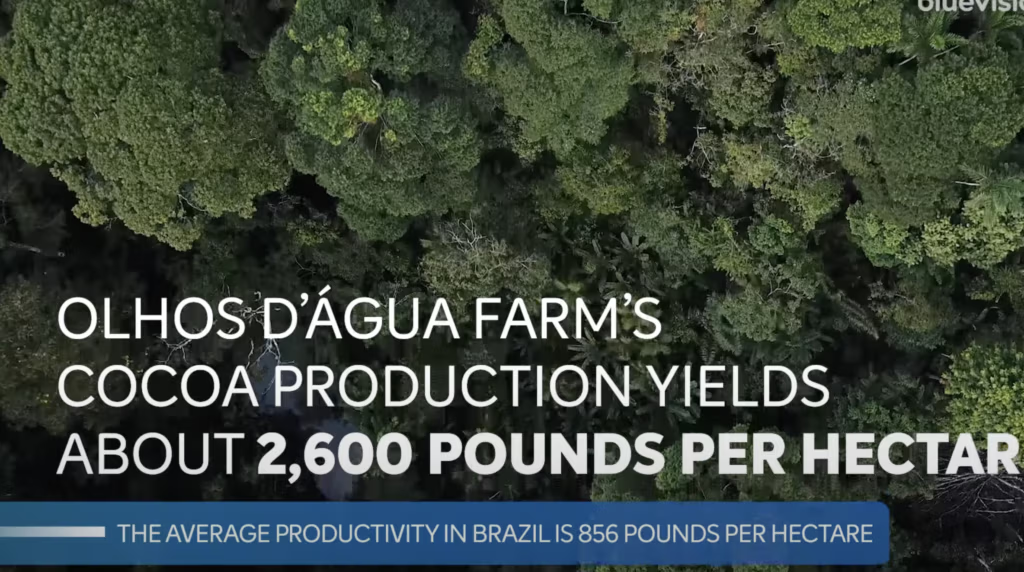
Yet despite compelling results, these approaches remain marginal. Not because they fail, but because they ask something unfamiliar of us: to relate to land—and ourselves—beyond intellect alone.
Modern culture proposes that the thinking mind is the primary tool for navigating reality. But living systems do not reveal themselves fully to analysis alone, they respond to attention, patience, and relationship, using feelings, senses, and intuition.
Syntropic Agroforestry or Food Forest systems, reward this kind of engagement. Although the initial high density of plantings can at first look chaotic to the untrained eye, the underlying order is soon revealed: plants supporting each other, soil deepening, bird and insect life returning. Productivity builds as ecological health builds. Instead of battling constant problems, the work becomes one of guiding succession and responding to feedback from the land and the plants.
When we see ourselves as part of that system — not separate from it — design becomes an unfolding conversation rather than a rigid set of instructions.
Nature has always known how to create abundance. The shift is learning how to relate with her as attentive, responsive stewards, supporting the conditions that allow her to provide the food, fuel, and fibre we seek. Then patterns become visible, we notice where and when to plant to fill the available niches, and diversity stops looking inefficient and starts looking intelligent.
I have longed to create and take my place in a diverse and dense system like this but I didn’t know where to start. Collaborating with Arthur McInnes and James Andrews and creating the Fast Track your Food Forest series turned out to be the magic step.
The four months since planting these five 25 metre rows in mid October here at the Nature School in Mangawhai, has been a journey of delighting in the wonder of what nature is capable of.
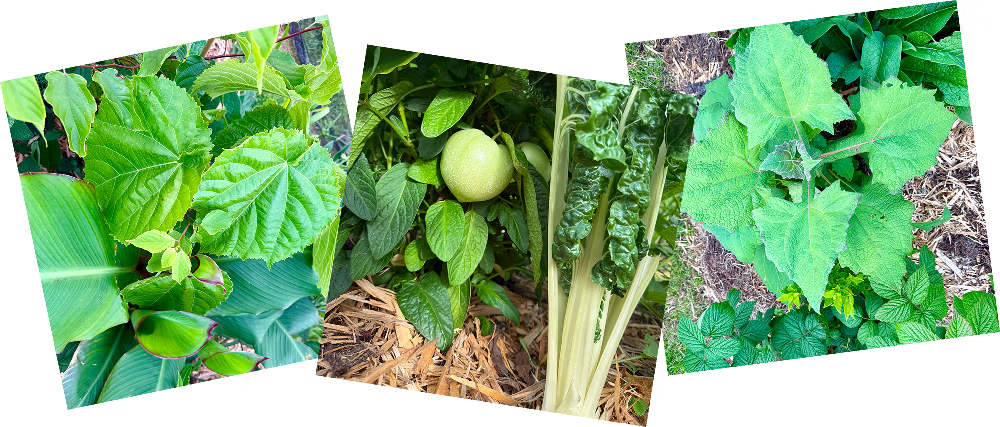
I have felt more consistent joy than at any other time in my life, expressing my appreciation to the plants and watching as they put down roots and burst skyward, with extraordinary vigor!
Tears are streaming down my face as I write this and acknowledge the joy these past few months have brought, discovering and deepening my role in nature as nature.